“To be an activist requires a tremendous amount of patience, strong will and determination in order to achieve your goals.”
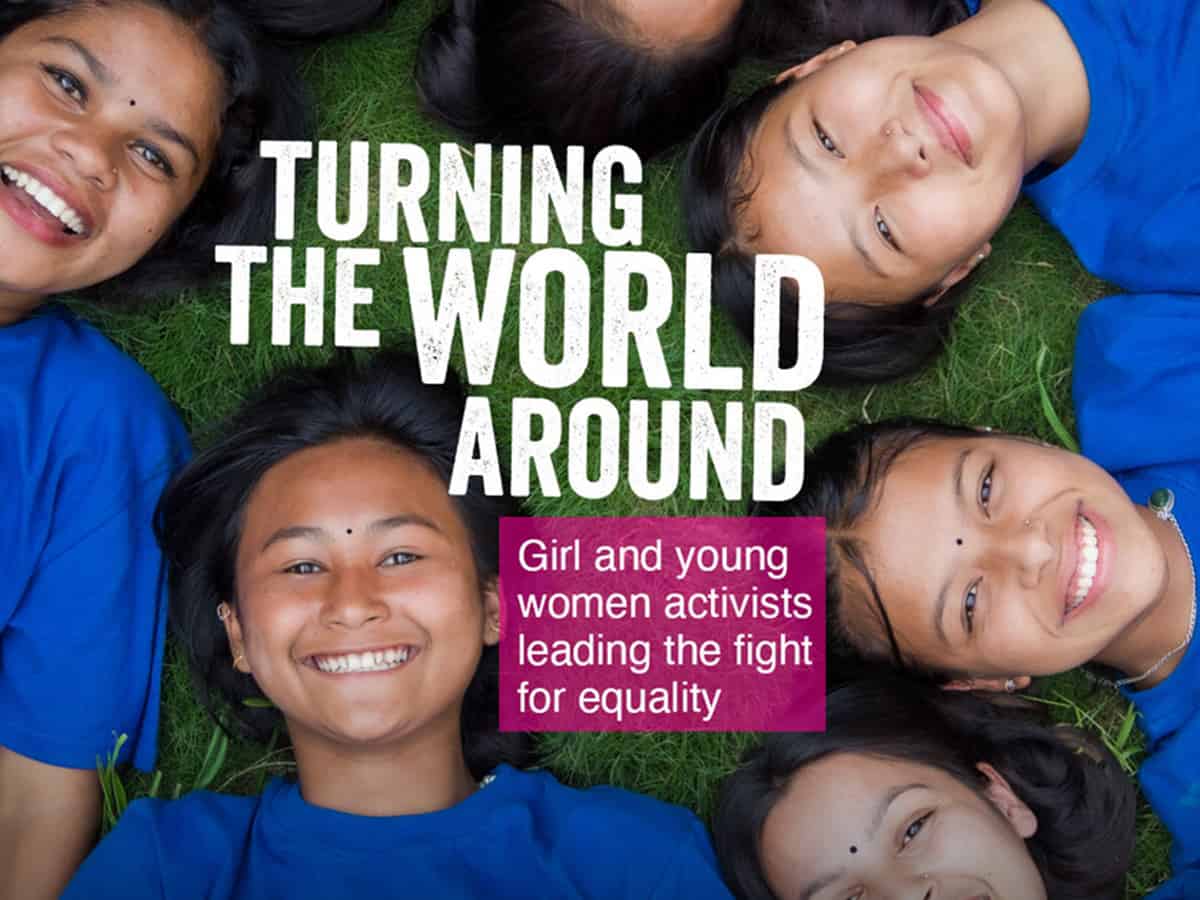
That’s what 25-year-old Muzoon had to say about her experiences as a young activist. And, that sums up the findings of Plan International’s newest research. The report, titled “Turning the World Around: Girl and young women activists leading the fight for equality,” involved over a thousand young female activists from 26 countries, ages between 15 and 24.
Talking to these activists, it’s clear how girls face a multitude of challenges as they campaign for change, facing risks ranging from hostility from community members to oppressive policing and online abuse. One in 5 (17%) girl and young women activists have feared for their safety while carrying out their work. One in 10 (9%) have faced threats of physical violence as a result of their work, while 15% have experienced online harassment and abuse.
Read: Plan International USA announces new report on global youth activism
But it’s also clear that girls are more passionate than ever about activism. Nearly all girl activists (95%) say campaigning has had a positive impact on their lives, making them feel proud, empowered and capable.
In honor of International Day of the Girl on Oct. 11, we’re highlighting five of the activists interviewed for the report (plus one activist group), sharing their stories in their own words. As you hear about their experiences, you’ll learn about what is motivating them to fight for change today — and, hopefully, get inspired to help them create a better tomorrow!
1. Blessing, 17, Sierra Leone
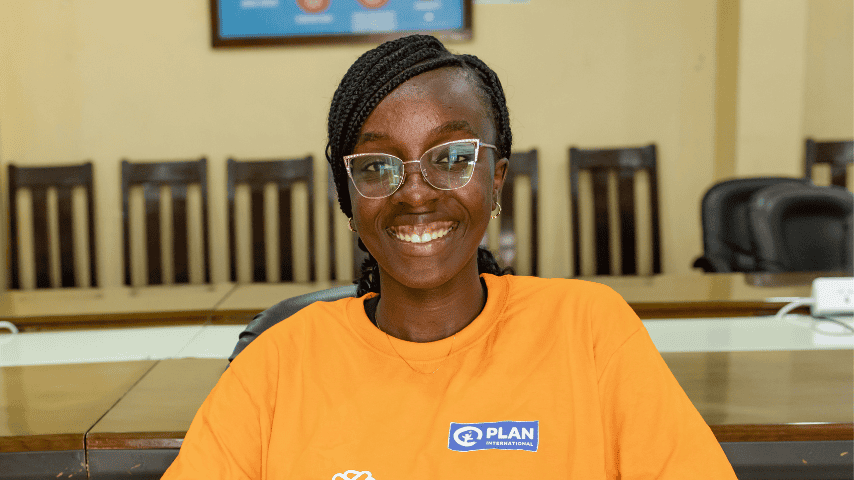
Blessing has just turned 17 years old, and she has already helped pass a new law in her country. On the International Day of the Girl 2022, Blessing and some of her peers took over the Sierra Leonean Parliament with Plan. They used the moment to raise the Gender Equality and Women’s Empowerment Bill. This legislation aims to improve socioeconomic conditions for women and increase representation by reserving 30% of elected and public office positions for women, including one constituency seat in every district for female candidates on a rotating basis. Here’s what she had to say about her activism, in her own words.
“I was actually sitting on the seat of the top position inside the parliament where, you know, one hardly sits there. So it was just an amazing experience for me. I felt so accomplished, and I felt that the hard work, the late nights where I had to do research … and I had to prepare myself well and I had to overcome the phobias I had. It did not go to waste.
“We’re celebrating something that we worked hard for. Advocacy and activism is a passion that lives in me, and I’ll do it to the end. I’m so concerned about human rights. I’m someone that is concerned [about] people being given justice. As well as gender equality and female empowerment, there is child advocacy as well. Activism, campaigning and advocacy is something I’ll never let go of. I’ll always do it, even as a grown up, even as an old lady in the future.
“We also had provisions in the [GEWE] act which catered for the protection of women in their workplaces. The act does not only focus on women in politics, that is one aim of it, but it is also focusing on how safe women can be, because as women, when we know that we are safe, then we can occupy so many more spaces. …
“Women were hiding at the back of the room. They did not have the confidence to step out, to step up. So the act that we have now is safeguarding the future for us, the girls, and has already made the safe space for women [and] children to involve themselves in politics and leadership. …
“Women had been sidelined, but now they’re on the frontline of politics. So definitely, I am quite sure and I am certain that there’s going to be an increase in female representation, not only in Parliament but in government offices and private sectors all around the country. …
“Advocacy is not just something I put my heart into to get myself seen, but a passion I have had from a very young age. That is why I strive very hard, even in school, to get a leadership position. I have seen how boys have a lesser regard for females, so I’ve taken that up as my responsibility to empower other girls, but also, I want to be a role model. I involved myself in advocacy and I’m someone that likes to stand up for others. I take it very seriously. Girls have so much potential, but they’re not given the platform to exhibit this potential.
“That is why I stood up as a middle person, between society and girls and young women in my country, because I’m ready to let them see what we have as females. To let society know what we can contribute and to show each and every person out there in the world that there must be no discrimination or less regard for females. It is not right and it is not an image we should encourage.”
Read: Photo story: Focusing on girls’ political participation in Peru
2. Fatima, 21, Lebanon
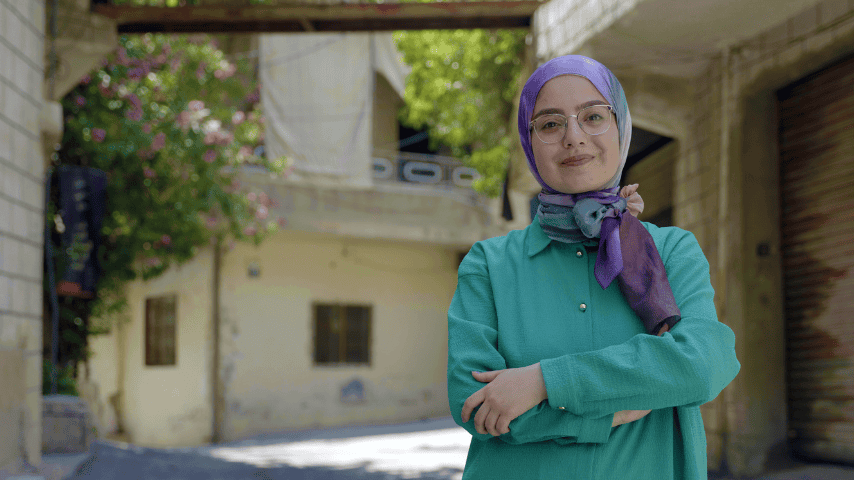
Fatima is a 21-year-old activist from Lebanon. As a journalist and a content creator, she believes the future is on social media and that for her to succeed as a change-maker this is the space she must occupy to share her message, despite receiving online abuse. When she was in college, she joined Plan’s She Leads project, through which she met other young women fighting for equal rights. They worked together to build a podcast that highlights the issues affecting young women in the Middle East and North Africa to reach more girls. Here’s what she had to say about her activism, in her own words.
“I was born with this. I was growing up with these ideas without knowing that these ideas have a name, and then they have some technical names. I can do something; I don’t have just ideas. I can do change, I can make change, I can have an impact.
“I get emotional when I remember She Leads, because it was my first regional feminism activism. It was the first time I [had] met feminists from Jordan, Iraq, Tunisian girls and the Egyptians. It was so inspiring to me to meet them and to work on this project. All of us were working from our hearts and not just from our minds. We really have a cause that we are defending.
“With Plan International, I have learned a lot of things. I get the chance to know more about sexual, reproductive and health rights. Thanks to them, now I know better about this, and I consider myself as an advocate of SRHR. The podcast we have made has an impact on people and they are listening to it. I’m super proud that I took part of this as well as the call-to-action campaign.
“It’s made an impact and some people were replying to my stories on social media saying bad things and good things. The bad things were good for me because I knew that when we are making something, it will have negative opinions and positive opinions. The negative opinion is a proof that we have made an impact.
“Still now, we are networking together as She Leads, the feminists and activists, and we are talking and we are friends. The sisterhood Plan International gave us or offered us was something so priceless. …
“We have a long way to go … but we are making impact along the way. I feel that I have a ball of fire and it’s always warm and it’s always shining and I have a long way to go, but I’m ready for it. Whatever the struggles are, and whatever the barriers and that will be put in my road, I will continue no matter what. I hope my story empowers other girls and helps them make a change.”
Read: The misinformation machine is hurting girls, and there are no signs of it stopping
3. Oilean, 23, Ireland
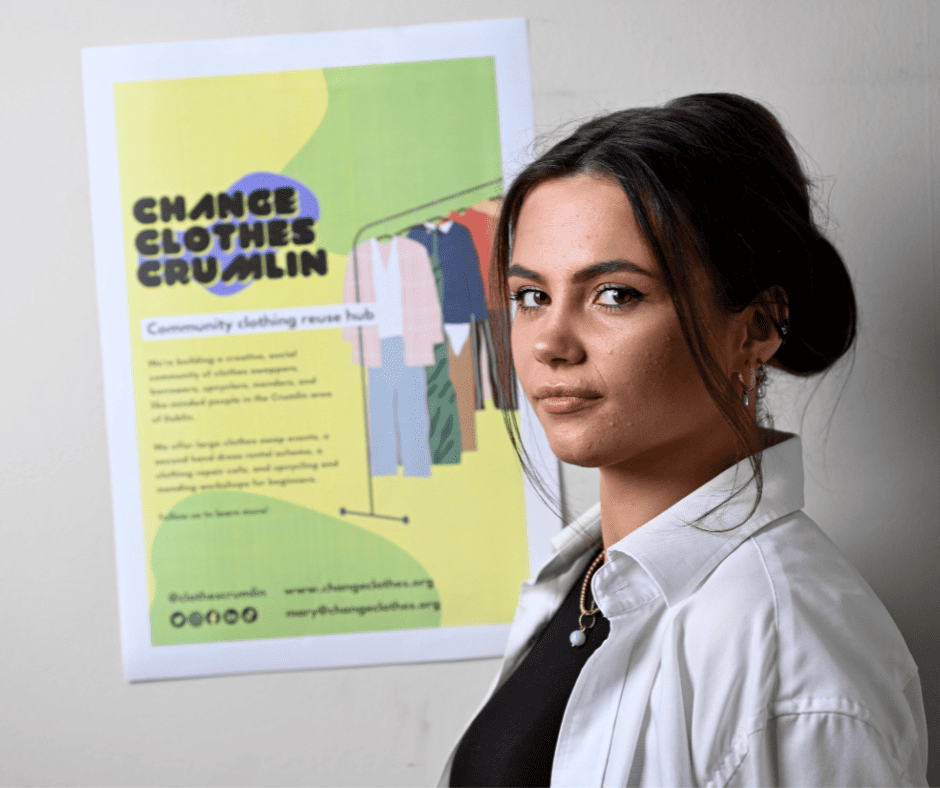
Oilean, 23, runs Change Clothes Crumlin, a community-based clothing reuse hub, with her friend Mary. Locals can go and swap their clothes with other people, saving money themselves and reducing their carbon footprint, providing a cost-effective alternative to unsustainable fashion. So far, they have saved over 6,000 pieces of clothing from landfill in under a year and provided a space for the Crumlin community to come together and contribute to climate action in an enjoyable way. She was also the first Irish Climate Youth Delegate, and attended COP 26 and COP 27. She serves as a Youth Advisory Panel member for Plan International. Here’s what she had to say about her activism, in her own words.
“Crumlin is a working-class area in the south of Dublin, Ireland, and I think that quite often working-class people are the subset of people that are left out of the conversation. Working-class people don’t generally have great representation when it comes to politics because of how unequal it is. Myself and Mary, who run CCC together, both have a background in climate and climate activism and the circular economy.
“We’ve experienced how climate anxiety can affect your mental health. It can be hard to engage in when it makes you feel like that. So, what we wanted to do was kind of twofold in that we tackle the problem while providing something new for the community. We want people to feel connected to the problem so that they feel good about the change that they can make about it.
“The idea is to have a bit of fun, so what we do is we try to tackle textile waste at all stages of its life cycles. So, with new stuff, we run one-for-one swap shops where new stuff can be redistributed. [For] items that need a bit of mending, we try to fill generational gaps by teaching sewing workshops. …
“There are huge human rights abuses when it comes to clothing and the production of clothing. I think that when you learn how to do these things and when you learn the skills that are involved in creating clothes, you have a new value for them. …
“Being involved in both grassroots activism and high-level discussions is a privilege. I do think that individual actions are really important, but systemic change needs to occur because people are happy to do it, but they don’t always have the access or the resources to do it. You can’t have climate action without community.”
Read: Did you know? Fashion designers in Africa are changing more than styles
4. Rahimat, 18, Nepal
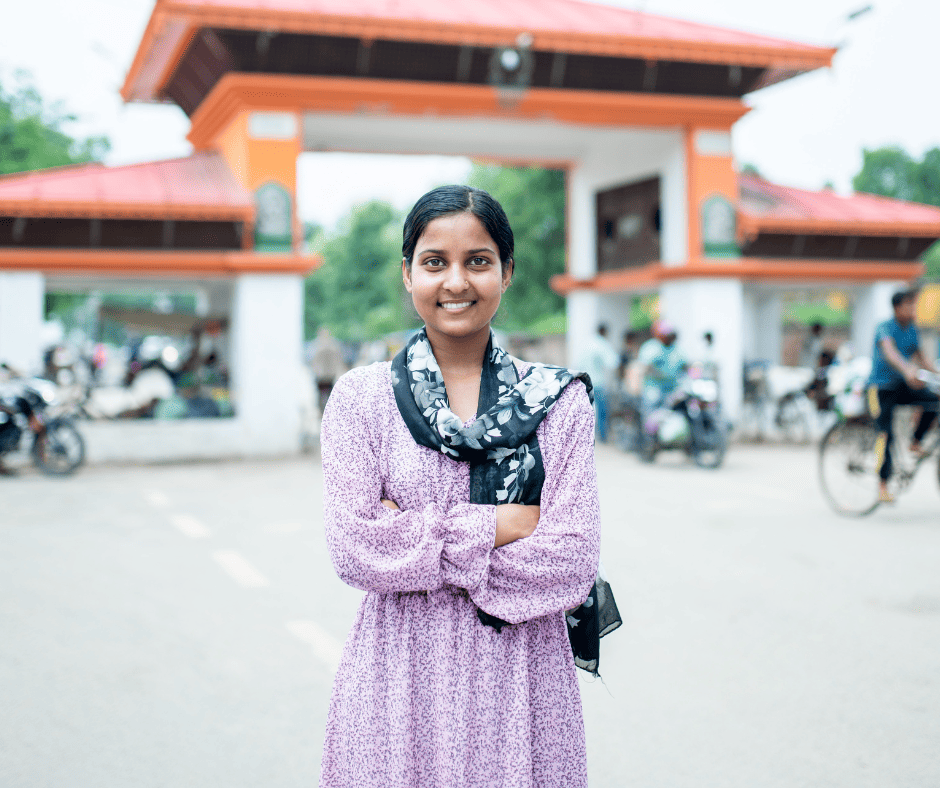
It is not typical for girls to speak up in Rahimat’s village, which is in the Western part of Nepal. But 18-year-old Rahimat is firm that she will be the voice for girls who are not able to advocate for themselves.
Rahimat comes from a remote community where traditionally girls are not encouraged to continue their education, but instead to marry. Recognizing that she was fortunate to have supportive parents who prioritized her education, Rahimat was one of very few in her community who were able to pursue further studies. Now she is preparing to study medicine at university.
Frustrated that the option to study is not available to all girls in her community, Rahimat says she wants to use her education to champion the rights of girls, fighting against the restrictions placed upon them that are holding them back.
She credits her education with offering her freedom for her future, and says that her motivation comes from the girls around her.
“Girls are not free to dream of their own futures,” she says. “This put a question in my head, and I wanted to gather more information about this.”
Rahimat is part of a children’s club set up by Plan International, which she credits for giving her a full understanding of children’s rights, teaching her how to work with local governments and building an understanding of politics.
For the past year, she has been the vice president of the National Adolescent Girls Network, led by Plan International’s local partner, Child Workers in Nepal Concerned Centre. The network offers two or three girls from each district the opportunity to get together and discuss the issues affecting them in a safe space.
The girls attend capacity-building training and workshops on leadership, and are taught how to effectively plan a campaign and become change-makers. Representatives then take these learnings back to each district and share them with their networks, reaching more girls in rural communities. It acts as a powerful tool for young people who are not able to leave their provinces to learn about their rights and how to advocate for themselves and others in a united way.
Rahimat is also involved with PROTECT, a project that supports Plan International USA’s We Are the Girls campaign. The project offers a holistic approach to preventing human trafficking that includes everyone, from girls and their families to border patrol agents and local businesses. As a Plan International Youth Ambassador, Rahimat works with the project to educate people about human trafficking and how to keep children safe online.
“Whenever I find an issue, I cannot keep silent or quiet, I have to act on it,” Rahimat says. “This is my spirit. I want to support girls who are having issues and help them convince their parents to keep them in school. I want to be a role model.”
Read: Shreya, the woman doing a “man’s job” in Nepal
5. Soumaya, 23, Somalia
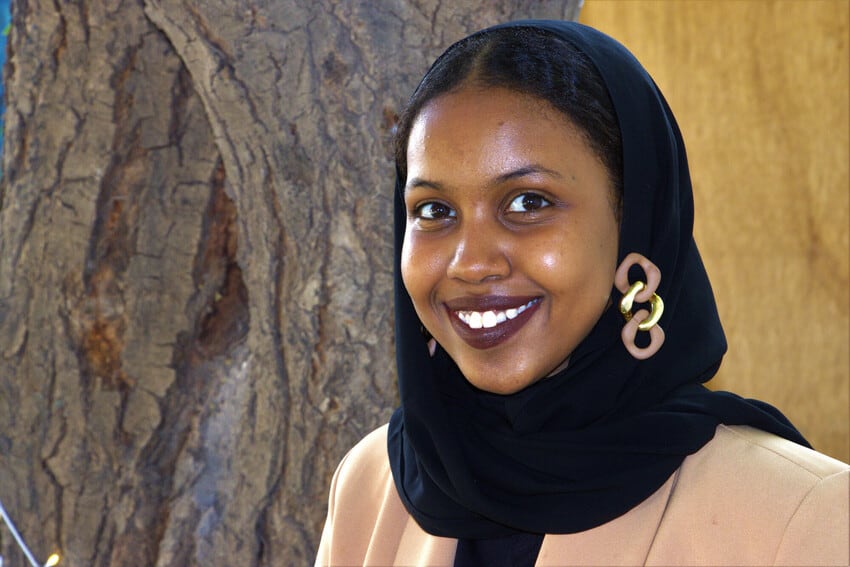
Soumaya is a 23-year-old activist in Somalia. She built a safe space for girls and women in Somaliland, designed to empower them to succeed in the workplace. Not only has the space become a place for increasing career prospects, it’s also a place where new female businesses are created and where women can come together and talk about the issues affecting them, learning from and supporting each other. Here’s what she had to say about her activism, in her own words.
“It started within, because I wasn’t confident enough to advocate or become a voice for myself. … During my education and field work, I realized that I was good at connecting with people in general. I became someone that has awareness about problems and the issues of my community.
“Later on, I noticed how we as girls in Somaliland are discriminated against when it comes to education, when it comes to the workplace, and we are the minority. I started volunteering for a coworking space. I became a community manager and then after maybe four months I decided to turn the coworking space [into] a community hub, to build a safe place to work, come together. A place that people could just share their thoughts, share their creativity.
“That’s actually how I also realized women in our country didn’t have a space to just be comfortable, discuss challenges and obstacles, just to be able to learn from each other. I made an agreement with my founder of that coworking space, and I told him, ‘Let’s give space for women for free. I’ll take responsibility and I’ll make programs for them. I will develop events and programs for them to give them more confidence.’ And so, he agreed.
“We became real partners later on. He saw how the space became really effective for youth. From there, I started initiating new things. I gave the space for free to ladies that wanted to hold awareness events, trainings and workshops. I started a program [about] skills for job searching. I was teaching how to write a CV, hunt for a job, get an interview. It actually became somewhere well known, everyone started to know about it. It’s somewhere for youth where there is no discrimination.
“All the youth come here, even guys, and there is no gender inequality. It is a safe space where everyone is free to share and to propose their ideas and learn from each other. I was quite happy to make this space. I knew that that’s what we needed. We need to have this bond, where we are equal, and we can share things. It has been a journey and I really love what I do. I witness how it is really empowering for women. …
“I thought that only women would appreciate the space, but I see men also appreciate it. It is great they are willing to work with women. Men now understand the value of having a woman in their business or their company. In our culture, it’s not normal for a woman to sit with a group of men in a restaurant, but this is totally different. Men and women exchange ideas in a secure space.
“Men are willing to listen to women and learn from them – that is quite impressive. We have also inspired the creation of more innovation hubs and knowledge centers — it is really amazing to see.”
Read: When it comes to gender equality, what about the boys?
6. The Guatemalan Girls Empowerment Movement
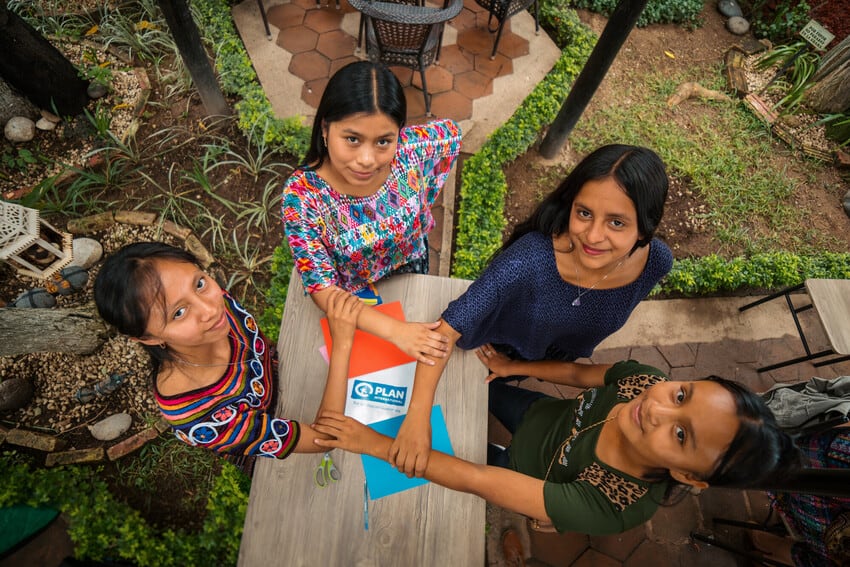
In Guatemala, Plan International started The Guatemalan Girls Empowerment Movement, a collective of adolescent girls and young women from rural communities. The movement provides a safe space where they can come together and discuss the issues that girls in Guatemala face, and to find solutions. They even had the opportunity to present their thoughts to Congress of the Republic of Guatemala, speaking directly to the country’s leaders.
Lesly and Vidalía, who are both 19 years old, are part of the movement. They say that, in their communities, girls and young women are left out of decision-making and fear speaking up, as they don’t have the confidence to do so. Men are considered to be more important in this space, with women’s roles designated to the house, cooking, cleaning and raising children.
Vidalía says she has never seen a woman take part in community meetings. They are only invited to contribute when it comes to discussions about education in schools, as their role is seen to be raising children.
“The idea that women have to be behind men or that they cannot participate equally, this mindset limits their opportunities,” she says.
The girls reference the term “machismo,” the idea in their culture that men and boys must be respected. Vidalía believes this concept sets an unsafe precedent for girls and creates dependency on men, diminishing girls’ role and causing them to grow up on an unequal footing, with less confidence or self-worth.
Heydi, another movement member, agrees that machismo can be limiting for girls and women and reinforces traditional stereotypes. The 18-year-old has been attending Plan International’s leadership school, a safe community space where adolescent girls and young women meet to talk about the issues affecting them. It is designed to encourage girls to fight against gender discrimination and equips them with the skills they need to be part of the girls’ movement.
“I used to feel inferior, but the leadership school helped me work on my self-esteem, which I believe made a real change in my life,” Heydi says. “I am looking at the results of how women can be heard.”
At 14, Yoselin is one of the youngest members of the movement. She has witnessed violence against women and girls in her community, and says there is also a problem with teenage pregnancy. She wants to use her activism to help other girls to find their voices and have the confidence to share their opinions.
“I want to equip them with the skills to advocate for, and defend themselves, especially if they are at risk,” Yoselin says.
Yoselin says she would like there to be youth and women’s voices at all community meetings, as it’s important that their opinions are taken into consideration.
“I know that my opinions are just as important as a man’s,” she says.
For more information on Plan’s research, check out the full “Turning the World Around: Girl and young women activists leading the fight for equality” report. You can also support young activists like the ones you heard from here by making a gift to Plan today!