For many girls and women living in Latin America and the Caribbean, mandatory isolation as a result of the COVID-19 pandemic is having dangerous and violent consequences, warns child rights and humanitarian organization Plan International.
There has been a significant rise in reports of physical, sexual and psychological abuse directed towards girls and adolescents, with many more cases likely going under the radar.
While confinement measures are needed to stop the spread of COVID-19, these same measures have left girls and adolescents much more vulnerable to different types of violence, including sexual violence.
“The control measures for the disease do not take into account the specific vulnerabilities of girls, adolescents and women as the risk of suffering gender-based violence at home, increases,” Amalia Alarcón, the Regional Head of Gender Transforming and Influencing at Plan International, explains.
- In Colombia, reports of domestic violence during confinement have increased by 175%, compared to the same period last year. The National Institute of Legal Medicine and Forensic Sciences revealed that, between the months of January and April of this year, 1,867 cases of domestic violence were reported.
- In El Salvador, data from the Legal Assistance Center of the Salvadorian Women’s Organization (ORMUSA), shows that during the mandatory quarantine between March and May, 193 complaints were reported; which is a 70% increase, in comparison to the same period in 2019. Additionally, there were 21 recorded femicides in this period.
- In Perú, in the first six days of quarantine alone, 2,463 complaints of violence against women or some other member of the family group were registered with Linea 100, the national domestic abuse hotline run by the Ministry of Women and Vulnerable Populations of Peru.
The increase in domestic and gender-based violence is attributed to girls and women being under the same roof as their abusers, who are, in most instances, relatives or close acquaintances. The majority of perpetrators of gender-based violence in Latin America and the Caribbean belong to victims’ inner circles.
Since the outbreak of COVID-19, Plan International has been working closely with communities in 13 countries in Latin America and the Caribbean. The organization has had the opportunity to collect the testimonies of girls and adolescents who are using their voices to express their feelings about the consequences of confinement on their lives.
“Right now, I feel insecure because we don’t know what the consequences of this will be until it is over, or how many girls are suffering at home, surrounded by abuse and violence.”
Lucía (17 years old) – Paraguay
“The problem that worries me the most is that a girl or a woman may suffer verbal, psychological, sexual or physical violence.”
Vilma (13 years old) – El Salvador
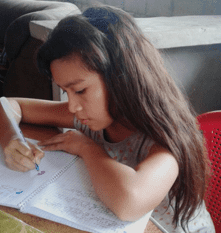
“The downside to all of this is the fact that everyone is at home, which increases rates of domestic violence. People are forced to spend more time together, and many incidents take place in the home. Unfortunately, many of these incidents go unreported because some of these families are not ready to live with the consequences and end up making a very difficult decision: remaining silent and trying to live together.”
Islany (17 years old) – Brazil

“Gender-based violence against girls may result in forced pregnancies as a consequence of sexual violence and a lack of access to sexual and reproductive health services,” says Ms Alarcon.
Girls are more likely to be pushed into an early marriage if they are facing violence at home.
Gender-based violence also has long-term consequences on education. The closure of schools has forced girls to continue their studies from home, where they may be experiencing violence. Once out of school, girls are less likely to go back, due to heavy burdens of unpaid care and domestic work.
Plan International is working with national and local governments, civil society organizations, youth and community groups to protect girls and adolescents from gender-based violence. The organization has reinforced virtual channels and remote communication with girls, youth groups, communities and authorities, at all levels.
“The objective of our work is continue understanding and addressing the influence of gender norms on girls and boys, and how those gender norms can encourage and maintain violence.
“We are also working to strengthen the capacities of girls and young women and to influence decisions that affect them. We also consider it essential to continue working with boys, adolescents and men, supporting them to embrace positive masculine identities and promote gender equality, as a form of violence prevention,” says Ms Alarcón.
Plan International urges governments to adapt their systems of prevention and responses to gender-based violence, with a specific emphasis on children, and to guarantee sexual health services and reproductive rights to all girls, adolescents and women in Latin America and the Caribbean.
The organization is also calling for the strengthening of existing social protection systems and the promotion of a collective effort to eradicate gender-based violence.
Notes to Editors:
Please click here to access hi-res photos.
Donate to Plan International’s COVID-19 appeal and find out more about our response here.