“I thought, ‘How can a woman do a man’s job?’” Melany says. “Even more so with solar panels. But I decided to motivate myself and do it.”
Melany is one of 32 young women who completed the first phase of Solar Girls, a training program in the Dominican Republic that prepares girls for careers in renewable energy. She installed solar panels, completed an internship and started planning for a degree in electrical engineering.
Her story is one of millions playing out as the world races to close a clean energy gap — and as girls increasingly refuse to be left out of it.
Why renewable energy has a gender problem
The clean energy sector is one of the fastest-growing industries in the world. It also has one of the most persistent gender gaps.
Around the world, technical fields like electricity and solar installation have long been defined as male space — by culture, by training systems and by who gets hired. Girls grow up without role models in these sectors. They are rarely recruited into training programs. And when they do show up, they are often told, as Melany was, that the work isn’t for them.
This exclusion isn’t just unfair. It’s costly. The energy sector needs skilled workers to meet the demands of a sustainable future. When half the population is sidelined, that future becomes harder to build.
What Solar Girls actually does
Solar Girls is a collaboration between Plan International, Fundación Abriendo Camino and Nature Power Foundation. It is part of the Green Future initiative, which works to connect young people with training and employment in environmental sectors.
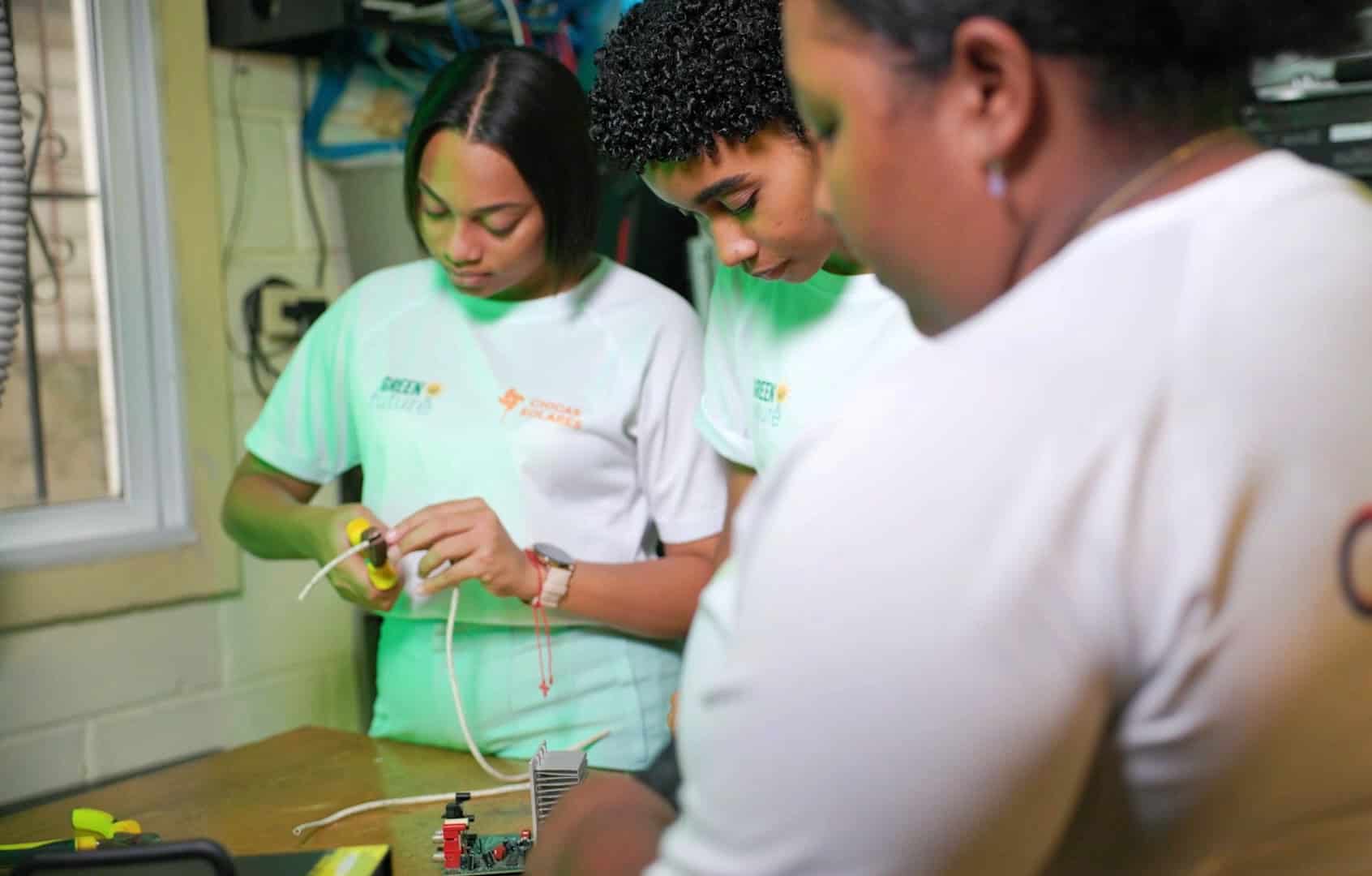
Young women practice electrical wiring during a Solar Girls training session in the Dominican Republic. | © Ernesto Rivas, Plan International
Participants learn to install and maintain solar panels, work through theory and practical classes, and complete internships with companies in the energy sector. But the program doesn’t stop at technical skills.
Melissa Fermín, Technical Training Coordinator at Fundación Abriendo Camino, describes what sets Solar Girls apart: “Solar Girls is a unique project because of its comprehensive nature. It not only covers technical training, but also personal development and soft skills, and it integrates a social aspect, too.”
In phase one, 32 young women completed the training. Fourteen went on to internships with energy sector companies.
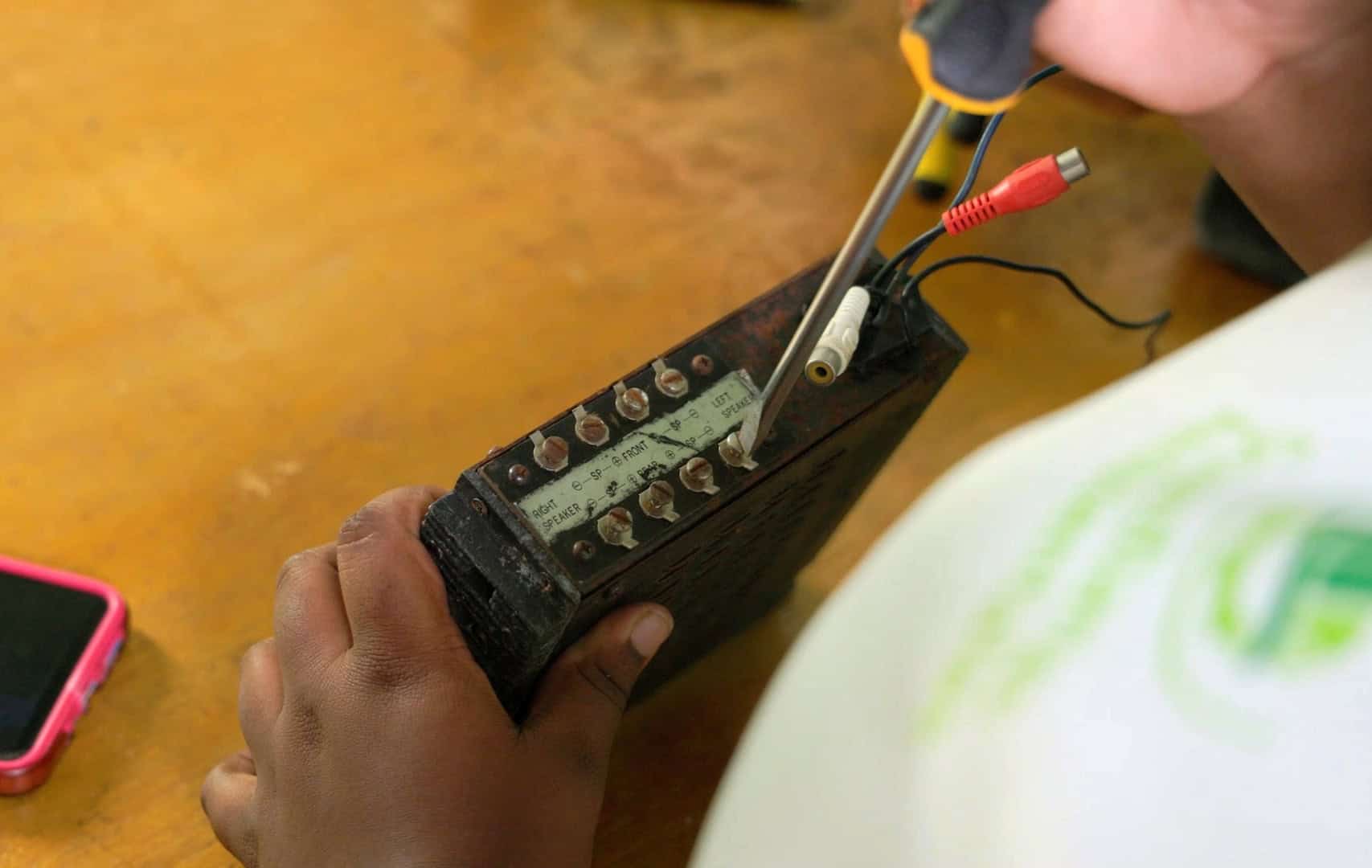
A Solar Girls participant works with electrical components during a training session in the Dominican Republic. | © Ernesto Rivas, Plan International
“I never felt discouraged because I knew what I wanted”
Nicole
For Nicole, joining Solar Girls was a turning point she didn’t anticipate. “My experience was unique,” she says. “I had never considered putting so many solar panels together or giving them torque maintenance. I really enjoyed my internship and would do it again several times over.”
She faced challenges. But she kept going. “I never felt discouraged because I knew what I wanted and was determined to keep pushing forward.”
The experience changed her sense of self, not just her skill set. “This experience has changed me a lot,” she says.
“Keep going, and if you fall, get back up again. Don’t say ‘No, I can’t.’ You can, because I did, and if I can, so can you. Yes, women can!”
— Nicole, Solar Girls participant
Lizmery
Lizmery came into the program with her own doubts — not about her ability, but about whether this world would accept her. “It’s a project that was apparently only done by men,” she says. “Seeing that women can get involved is very satisfying because it empowers us.”
The program gave her more than technical knowledge. “I used to be inconsistent and didn’t finish what I started, but now I’m more passionate and eager to improve myself every day. The skills I have developed mean that I can contribute to environmental care.”
“Nothing in life is easy, but everything adds up, any learning and knowledge you gain adds up, too.”
— Lizmery, Solar Girls participant
Melany
For Melany, the shift was in how she sees herself — and how she sees her future. Solar panel installation led her to the leadership and life skills workshops, which changed how she moves through the world. “They have taught me to be empathetic and to develop my leadership skills,” she says.
Now she has a plan. “The change I want to make is to enroll on an electricity course or go to university to study electrical engineering, because I am quite impressed by the solar industry.”
“My advice to all the girls is not to give up, even if things seem confusing and you don’t understand. Come to the Solar Girls project and you will be welcomed.”
— Melany, Solar Girls participant
More than a training program
It is the combination of hands-on skills alongside personal development and a network of institutions that back each participant through the process.
Fermín describes the power of that model: “The synergy created between the institutions involved in this project, including Plan International, has been invaluable in making the first stage possible. Our work as an alliance is highly valued because it provides not only financial support but also the strength we can draw from each institution to continue guiding each girl in the project.”
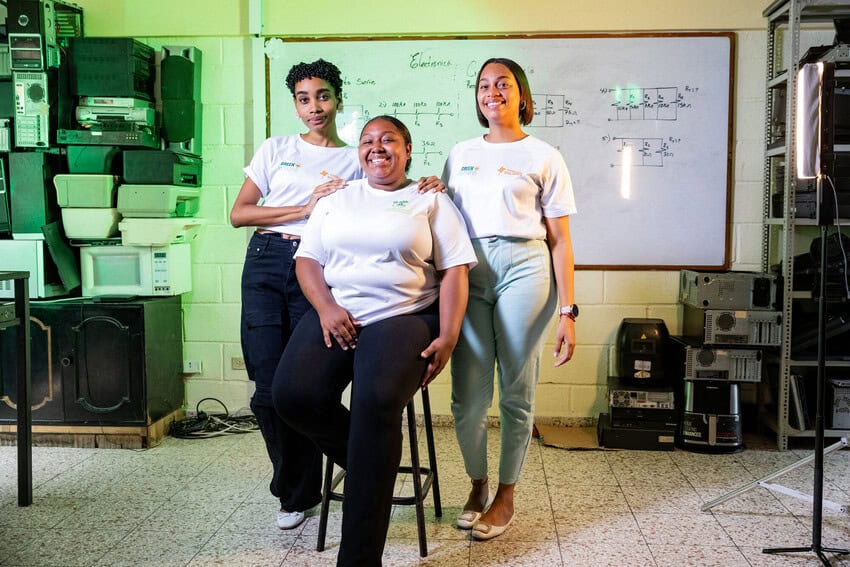
From left, Lizmery, Nicole and Melany, Solar Girls participants, in the Dominican Republic. | © Ernesto Rivas, Plan International
The results of phase one point toward what’s possible. But for Fermín, the work is just beginning. “I would like us to continue implementing Solar Girls and growing the network of young people that emerged through the first project,” she says. “This is a space for them to grow. We are open, and we hope many more will be motivated to participate in projects like this.”
As communities around the world mark Earth Day 2026 by reckoning with what a just and sustainable future requires, programs like Solar Girls offer a clear answer to one part of that question. The clean energy transition will not be complete until it includes everyone — especially the girls who have been told, for too long, that the work isn’t for them.
Melany knows better now. “A man can do it, and so can a woman,” she says. “And that’s what makes it impressive and different.”
Programs like Solar Girls show what’s possible when girls have access to real skills, real mentors and real opportunities. You can help make that possible by becoming a Her Defender and giving a monthly gift that supports programs like Solar Girls, helping to ensure the future of work includes girls.