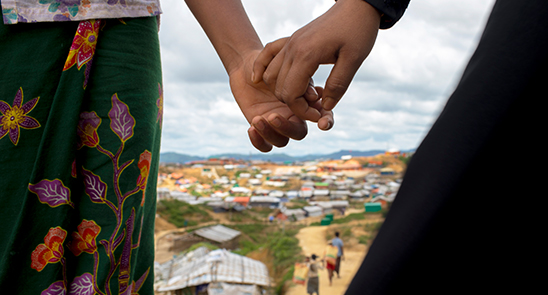
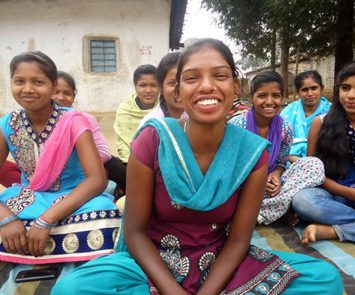
When she was 14, Jharna became a child bride. Today she is 22 and a divorced mother of a 7-year-old daughter. She is also one of the 11,000 survivors of domestic violence and other human rights abuses who have received services from the U.S. Agency for International Development (USAID)-supported Protecting Human Rights (PHR) program.
In Bangladesh, there are approximately 28 million adolescents between the ages of 10 and 19 years old, of which 13.7 million are girls and 14.3 million are boys. The net enrollment ratio in secondary schools for boys is 45% and 50% for girls. Throughout Bangladesh, poverty is endemic, with 31% of the population living on less than $1.50 USD a day. Furthermore, 47% of boys and 56% of girls drop out of secondary school. Although there is a government stipend that is supposed to serve as an incentive for girls to stay in school — the equivalent to three days of food for a family — the number of girls completing secondary school is 6% less than boys. In Bangladesh, 66% of girls marry before the age of 18, the third highest rate in the world. Parents often encourage girls to stay at home due to safety concerns, as sexual harassment is widely experienced on the way to school, with the number of reported cases increasing.
For the past five years, Plan International has implemented the $12.7 million PHR program and focused on creating awareness among young people about gender equality as a way to help reduce domestic violence and human rights abuses such as child marriage, dowry, sexual harassment, trafficking-in-persons, stalking, rape and child abduction. The program is being implemented in 102 unions in the six districts of Barguna, Bogra, Chittagong, Dinajpur, Jessore and Sylhet and uses a comprehensive and holistic set of interventions to combat child marriage, domestic violence and other human rights abuses through an integrated, grassroots and multifaceted approach. Partnerships with 12 local organizations, alliances and collaborative efforts foster preventive and protective measures, promote legal and human rights, and develop linkages between and among local and national government representatives, non-governmental organizations, civil society and community leaders.
Jharna received important services, including support from the PHR-trained social worker who provided vital psychosocial help, as well as training in homestead gardening. In addition to these activities, PHR programming strives to prevent other girls from becoming child brides and giving community members a better understanding of gender equality.
One successful part of the PHR program includes working in schools with children and young people to build awareness of gender equality at a critical time when gender identities and respect for gender differences among boys and girls are being formed. PHR’s school-based program has been implemented and replicated in 134 schools and nine Islamic colleges, known as madrassas. Our work in schools has included awareness sessions and training with students, teachers and school administrators; training of peer educators; and the creation of sexual harassment prevention committees. The school program started with formative research that was carried out in 10 schools in two project areas. It focused on behavior change of boys and girls and confirmed that patriarchal values resulted in gender biases and inequality at a very young age.
In 2012, a pilot program was carried out in the same 10 schools in the two geographic areas. The pilot has since expanded and reached 23,360 students to date in 2016. What the program found was a receptivity on the part of school administrators, teachers, students and parents to gender-based violence (GBV) prevention programming. In addition to training opportunities, PHR has peer educators who conduct awareness-raising sessions, which include ludu games, quiz competitions and cultural events. The School Management Committees (SMCs) and teachers have also taken the time to discuss causes of child marriage, dowry and domestic violence, as well as how sexual harassment is perpetrated inside and outside of school premises. Sexual harassment boxes have been established in many of the PHR schools as a way for young people to anonymously report incidents. PHR has been effective in getting the Ministry of Education to integrate its materials into revised school textbooks with content about domestic violence prevention. Furthermore, starting in 2017, the national helpline number that individuals can call to receive counseling, make reports and get referrals on GBV issues will be published on the back page of school text books from classes four to eight. This initiative is another opportunity to raise awareness so students will know where to go if they need support and assistance.
PHR is designed around USAID’s four relevant intermediate results and has five major program areas. These areas include: advocacy of legislative reform and enforcement to reduce domestic violence; capacity building of key stakeholders involved with the protection and promotion of human rights; increasing access to justice for survivors of human rights abuses; providing survivor services for victims of domestic violence and human rights abuses; and building mass awareness and implementing educational campaigns on domestic violence and other human rights abuses.
In 2016, PHR received a global award for the Best Project Design and Implementation across the Plan International federation. This competitive award distinguished PHR from hundreds of projects throughout the 70 countries where Plan International works as the one that best exemplifies tangible and measurable benefits to the community in working with children and communities, tackling gender inequality, engaging with civil society, influencing government and strengthening accountability.