With less than 1% of international development funding going to women-led organizations, where do girl-led organizations in the Global South find resources for their programming, activism and advocacy efforts? This was a question posed to Plan International’s Innovation Hub in 2019.
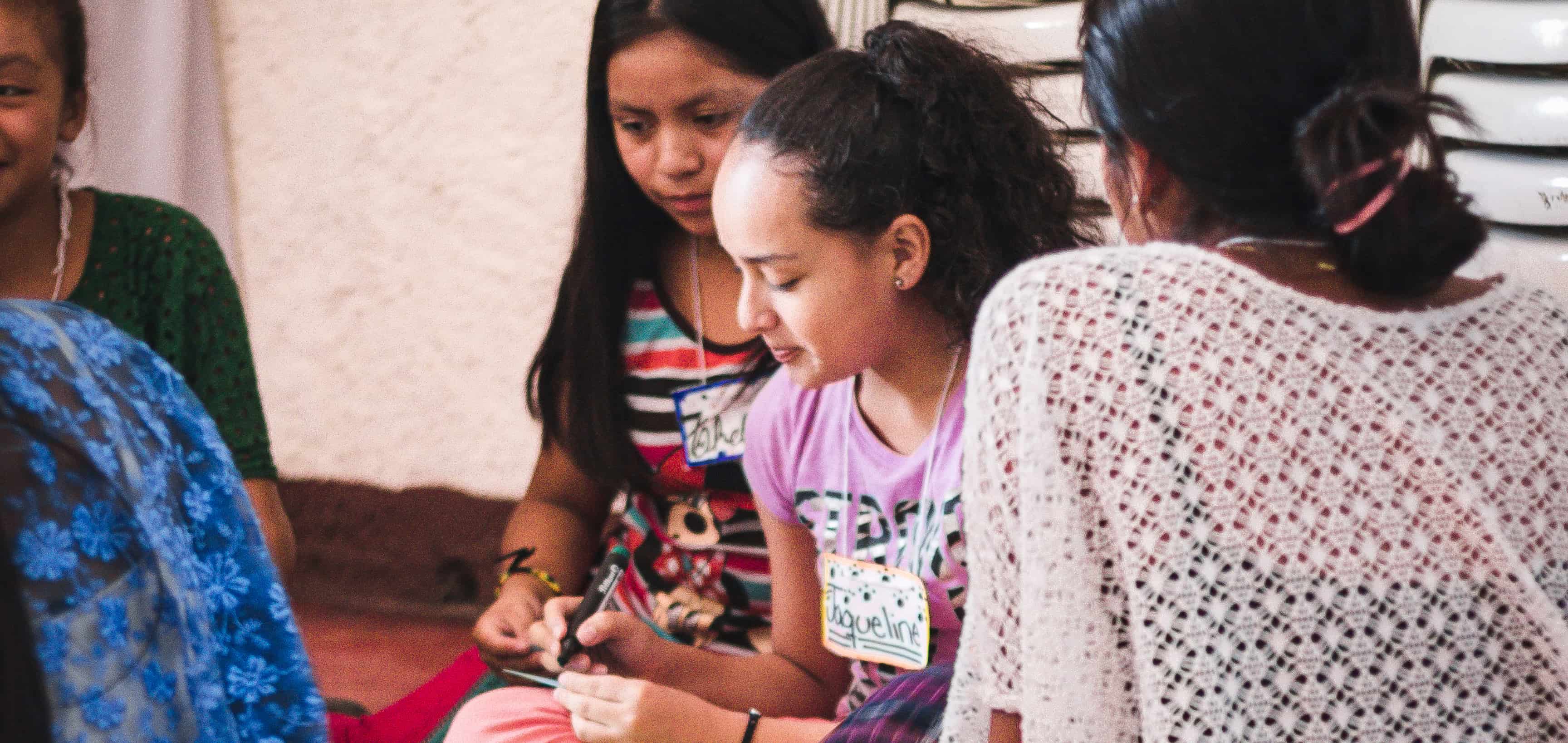
Through a series of consultations, girl activists considered this question and others like it. It quickly became apparent that there are lots of funding databases that already exist; however, they are not youth-friendly, nor are they regularly updated. In addition, applications can be long, convoluted and inconsistent. Existing databases often lack funding options specific to girls and their needs, particularly in the Global South. In general, girls felt they had limited access to key decision-makers and partners, which can be a factor in their overall success. These barriers were keeping girl-led organizations from locating and accessing resources, limiting their scale and impact.
Funding for girl-led organizations continues to be critical during crises like COVID-19. As resources are diverted to humanitarian response, girls get left out and left behind. This happens again and again and again.
So, what would a girl-friendly database look like?
- Flexible funding: The database needs to offer traditional and nontraditional funding sources, such as crowdfunding opportunities, community fundraising and municipal government funding.
- Application: There is a need for a consistent application and funding model for all opportunities — something like the Common Application used by students in the U.S. to apply for college. In addition, there is a need to put support systems in place to help marginalized girls access assistance when filling out applications.
- Mapping: A girl-friendly funding database provides useful information to users by mapping seasonal trends that show how funding opportunities are flowing, as well as hot spots and gaps throughout the year.
- Tools and resources: Girls are looking for tools and resources to access funding and manage grants. There is a need to grow the capabilities of young people to manage funds, create a bigger impact and develop compelling reports, which can lead to more funding. They also want to help others out in the process and are looking for a collaborative hub to share knowledge. The website and tools need to be readily available and easy to understand.
- Network building: Girls would like to build a community where other like-minded organizations can come together and collaborate.
- No branding: Youth activists are more likely to use a site that is unbranded and not linked to one specific organization. This is a matter of trust for youth civil society organizations.
Equipped with this information, Plan International created the Equality Accelerator, built by and for girls.
How does it work?
Externally, a pilot has been launched in Guatemala and Brazil for one year. It is backed by Plan International, Mama Cash, CIVICUS, Frieda and other partners. Youth can search the database for funding opportunities or create a project page for crowdfunding. Plan staff are available to assist with applications at the community level to ensure that marginalized groups are able to access funds. In light of COVID-19, this is taking place through text messaging with free responses. Advertisements will be sent through youth networks, radio spots, social media channels and local partners.
To address the specific needs of girls, the Equality Accelerator has a resource hub that they can contribute to and where partners can upload resources they feel are helpful. In addition, a community page has been designed where groups can create profiles and communicate with each other. Funded groups will be able to access training and organize face-to-face meetings at the country level. This will allow girl-led organizations to build their capacity and local networks, as well as share successes and challenges. The Accelerator includes a mapping feature to help young people better understand funding cycles and where funds are currently being focused. And, the Accelerator contains no branding, though users can find information about how the site is supported in the FAQ section.
Internally, this new platform requires unlearning business as usual for Plan staff. Training for staff is focused on shifting attitudes; finance and compliance reporting processes; and related areas where bureaucracy and compliance measures hinder the ability to be girl-friendly. For the Accelerator to be successful, we need to remove barriers, which requires new ways of doing business.
In a rapidly changing world, girls are embracing innovation and providing unique perspectives on some of the most pressing issues of our time. How can the international development community support girls’ influencing and advocacy efforts? Supporting their ideas, solutions and networks is critical to finding solutions to climate change, gender inequality and unemployment. However, it also requires organizations to engage girls at all stages of a project. Girls need access to the funds, tools and resources to implement ideas that reach new populations in relevant ways and address the issues that are most critical for youth today. Youth should not just be invited to the table; they need to play a leading role in setting the agenda and strategic priorities.
Are you interested in giving girls access to real funding and decision-making power? Join the Equality Accelerator.
For more articles of this nature, sign up for From Plan to Action, a quarterly newsletter that highlights the technical work of Plan International USA.