Available water means more time at school
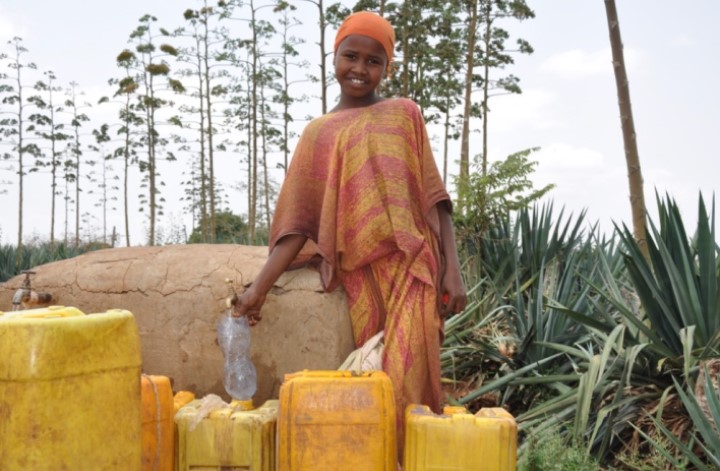
Like many girls in Ethiopia, 11-year-old Anisa is responsible for the household chores in her family, including fetching water. She used to spend an average of four hours each day journeying on foot to collect water from a river.
And the burden of carrying such a heavy weight for long distances prevented her from going to school.
“I was not happy when my mother asked me to collect water from the river because it is too far, and when I went to fetch it — which was pretty much every day — I had to miss my classes,” she says.
Anisa lives in a remote part of the Oromia region, which is frequently affected by drought due to the changing climate and low levels of rainfall throughout the year. Families are also forced to share their water source with animals, leaving them at risk of diarrhea and other water-borne diseases.
Ethiopia relies on the main rainy season for 80% of its agricultural produce. But in 2015, the rains didn’t come, and the effects were devastating. Harvests were ruined, water sources ran dry and millions of children were left dependent on food aid for survival.
“We didn’t even think about our sanitation,” Anisa says. “The situation was so serious that it just didn’t allow us to think about anything but surviving.”
There was a water reservoir nearby that should have prevented the community from suffering such extreme water shortages. But technical failures caused it to stop functioning.
Since the 2015 drought, things have been getting better. Plan International, in collaboration with the regional government, has repaired the water supply and upgraded the system by providing pumps, a generator, equipment and technical support.
Now, Anisa no longer has to travel for hours each day in search of water. And she doesn’t miss her school classes.
“My wish is for water to be available forever as it is now,” she says. “Now I also have time to play after school, as a child should do.”